.jpg)
June 19, 2025
How we design AI agents to plan, reason, and act
I presented on building effective AI agents, and this was the most-requested slide. I figured I'd go over it here!
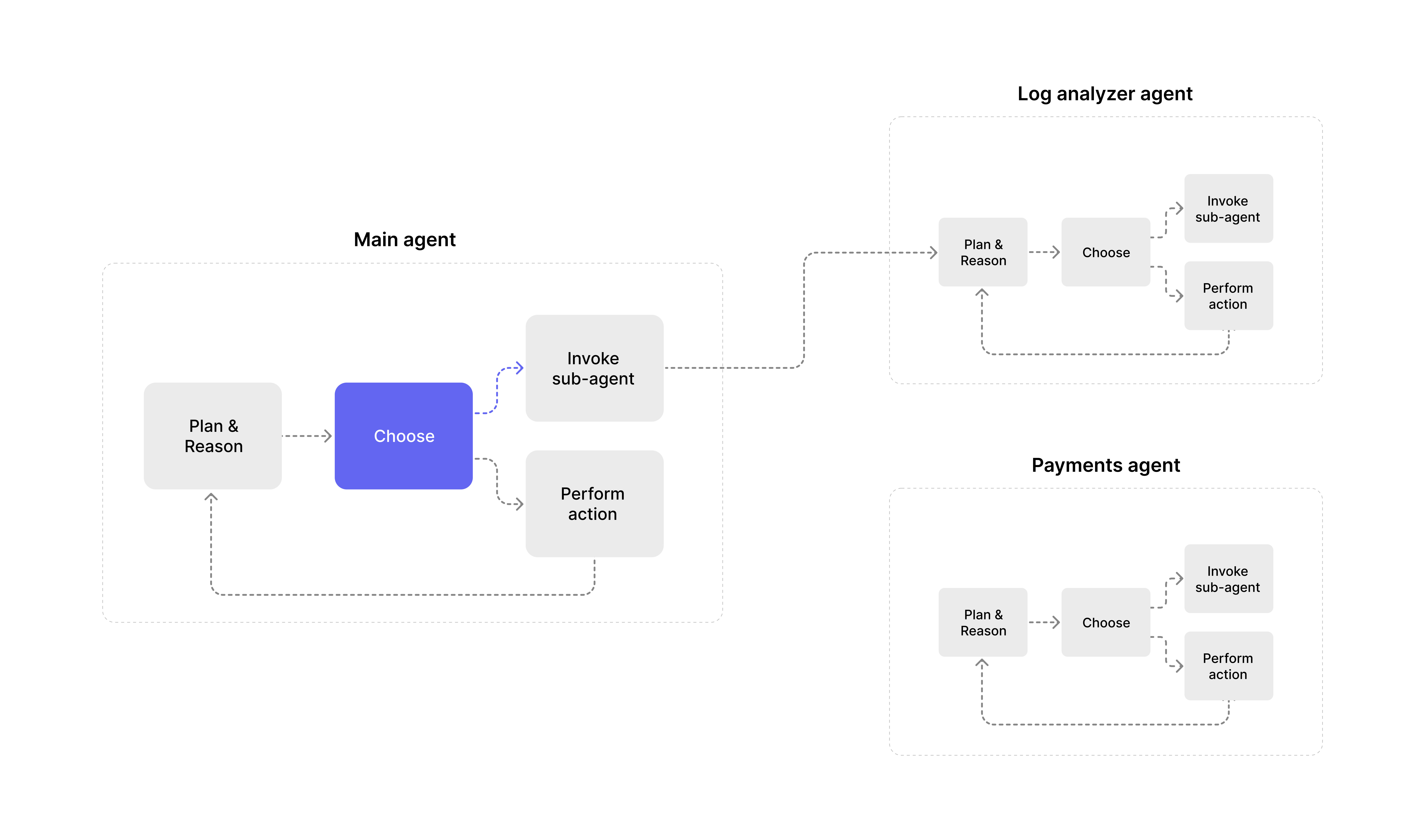
We model agents as planners.
They take input from the user, come up with a plan, choose the right action, workflow, or sub-agent, execute and repeat until the task is complete.
Instead of just responding to requests, our agents at 14.ai analyze the situation first.
The main agent goes through a "Plan & Reason" phase, then decides whether to handle something directly with an action, run it through a structured workflow, or delegate to a specialized sub-agent.
Specialized sub-agents - like a log analyzer agent or payments agent - have their own planning cycles too.
It's recursive intelligence, where each level assesses the situation before acting.
This is a bit more sophisticated under the hood, but gives us specific advantages if we follow these steps:
- Actions are small, focused units of execution - like "fetch payment info" or "search logs." Think of them like tool calls.
- Workflows are deterministic, multi-step processes. For example, canceling a subscription might involve collecting a reason, offering a retention option if applicable, checking eligibility, and then performing the cancellation.
- Sub-agents group together related actions and workflows into larger, domain-specific modules like a billing agent or a log retrieval agent.
With the architecture set, it all comes down to prompt design. That’s the secret sauce.
Well-crafted prompts make agents more reliable, more adaptable, and better equipped to handle complexity.
Curious what you're seeing in practice. Want me to share more from the presentation?